Monday, June 8, 2020

Lit. Review: Human Pressures and Ecosystems


In the course Frontiers, I pushed myself to think of innovative strategies that could change the future of oceans. Through this last unit, our class discussed the ways ecosystems function, what happens when parts of an ecosystem are disrupted, and climate change and its effects on marine life. I learned about the many factors of climate change as well and the impact it can have on the ocean. Rising sea levels is one issue that I studied with two other peers in my class. Before taking this class, I was very ignorant about rising sea levels and its consequences. The most important lesson that guided me through this course is that all solutions have both positive and negative effects. For example; there are systems that we could create to reduce pollution in the oceans but at what cost, and could it be practical? These are questions that I thought about when writing my paper on the future of oceans through human pressures and ecosystems. I really enjoy the psychological side of science because studying the behaviors in both animals and humans can tell you a lot about the environmental challenges that we are facing today. It felt good to acknowledge that taking care of the environment is taking care of my future and the future of others.


In conclusion, this was a project I was struggling with a lot at first because it was difficult to break down the information that I was consuming. Once I read more articles, I felt a lot better because I actually enjoyed what I was learning about, like how we’re so interconnected with marine life but don’t really talk about that. This Action Project made me think more about my actions and how I respond to different challenges.

Sunday, June 7, 2020

""SWEET TOOTH"", THE ZINE.


I created a zine for my independent study called Sweet Tooth. A zine is basically a mini-magazine or booklet that is mostly produced and printed independently and then distributed. Since my junior year, I've been compiling different work that I've made like collages, photography, sketches, etc. and trying to make a book out of them. In the future, I plan on being a working artist so the question that I tried to answer while completing this zine is, how can I produce, print, and promote my own work independently? When I started this independent study, I started off by scanning photos that I took along with the art that was in my sketchbooks. I then organized different pieces into five different chapters. Each chapter represents the feeling of youthfulness in the city and the beautiful experiences that come with it. I named it Sweet Tooth because eating candy reminds me of being a kid. I wanted to connect the sweet moments to the bitter ones that we face as teenagers. My photography in my zine also represents freedom, love, and power.

One of my favorite chapters is "Teens in Quarantine" because I captured all of the photos over Facetime and Google Hangouts but you can barely tell.


The Policing Project

I attended the Crime Survivors for Safety and Justice Training on the West Side of Chicago. Crime Survivors for Safety and Justice is a national network of crime survivors working together to create healing communities and shape public policy. The training was on safety and justice policy and addressed the needs of survivors. We learned about the incident of murder per state and how gun violence in particular shapes either policies for good, or is an example of how lack of policies cause more deaths. Survivors shared stories and engaged in action for change.At the end of the training, I received a certificate of completion. The picture is attached. 


The Policing Project at NYU School of Law has a pilot project in Chicago in the 25th, 15th, 9th, 10th and 11th Districts. The pilot has two initiatives. The Neighborhood Policing Initiative, where Districts are broken into 3-4 sections and special officers called District Coordinating Officers (DCOs) stay in that geographic area and do not leave. They are charged with not focusing on enforcement but instead focusing on problem solving. DCOs also engage with the community and attend community events. The other Initiative, the Community Engagement Initiative focuses on developing a group of community members called “Community Ambassadors” who work with DCOs to help identify and solve problems. On at least 5 occasions I attended the Community Ambassador meetings and assisted by helping with food prep and distribution and cleanup. I took attendance and handed out agendas. On 3 of the occasions I too “B-role” video of the meeting to be used in a short film about the project at a later date.

Health + Wellness- Quigong and Taichi as meditation

When everyone had to go in quarantine, my mental health worsened along with my physical health. I was sitting in bed all day even when I had to wake up for remote learning. It drained me and I'd have no energy throughout the day. I decided that mediation and practicing and self-awareness may help me deal with some of my feelings. For about 5 days, I practiced meditating through movement. I would focus on a positive thought or emotion and focus all of my energy on it. After a while, my problems would drift away and my body would get lighter. I discovered that Taichi and qigong are also good things to practice for meditation and movement. While I mostly learned about a few taichi stances and positions, I enjoyed qigong the most. Qigong is a meditation used for spirituality, mental and physical health, and martial arts training. When I'd feel tired and unmotivated in the beginning of the day, I practiced a 20-minute qigong routine I found on Youtube almost every day. I also began watching other videos to help with my mood and energy like Qidong Mood Lifter and Quigong for Flow for Brain Optimization. 


A video of me practicing Eight Pieces of Silk Brocade Qidong exercise 


Other videos I watched during my quarantine:
-  Qigong to Purge and Tonify: https://www.youtube.com/watch?v=3GtFp6sz5zM
- Quigong full 20-minute daily routine: https://www.youtube.com/watch?v=cwlvTcWR3Gs

Film+Community Service


Gene Siskel Film Center | Loop Chicago

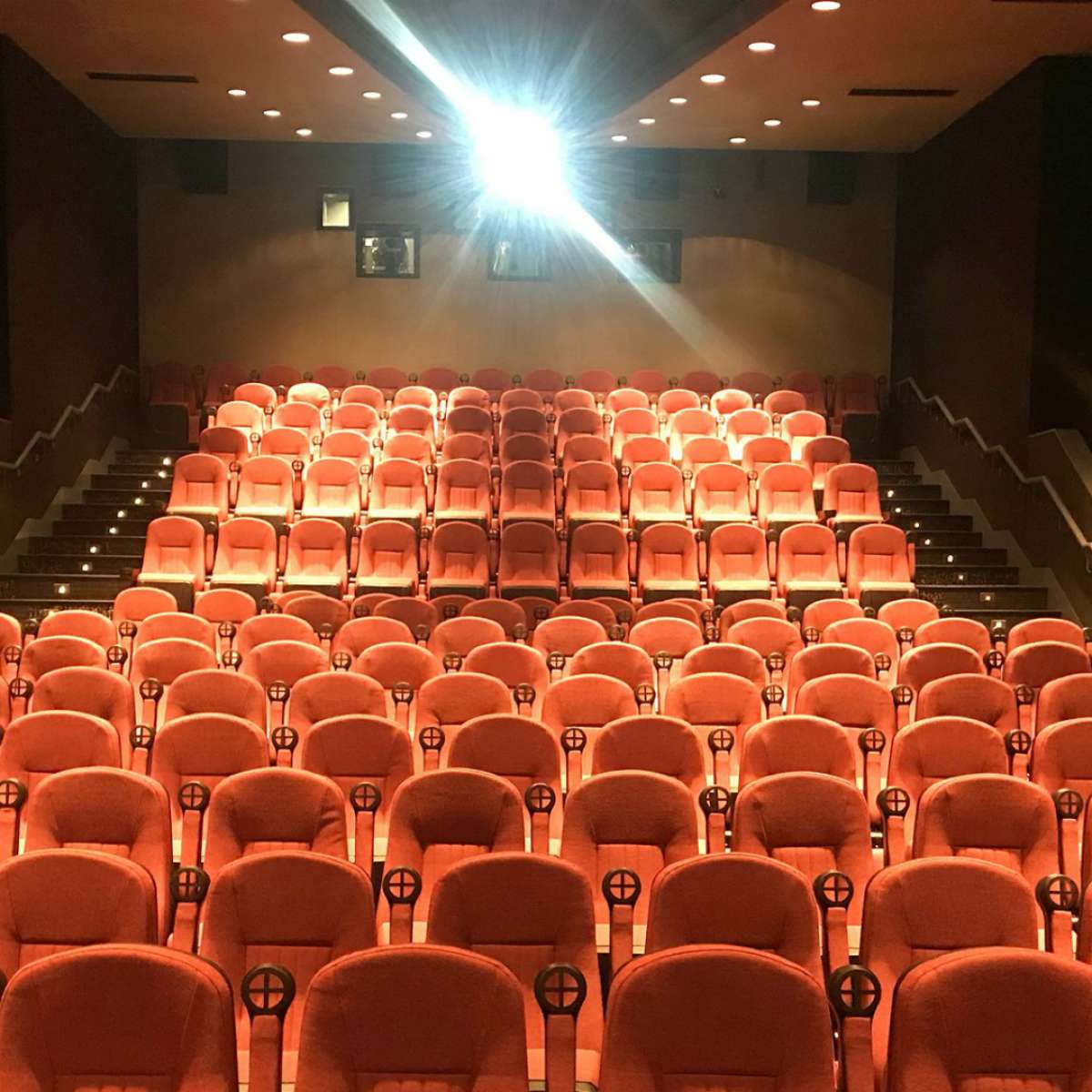
In October 2019 I volunteered at the Chicago Film Festival. In order to become a volunteer I attended a training session at Columbia College that discussed the different volunteer roles there are and what you do in one. One of the roles that I had there was counting each person that came into the theater with this little clicker they gave me. I can't lie, it was kind of fun. I also occasionally took tickets and voting sheets from viewers of each film. In my second shift, I was in charge of lighting and greeting each person who walked into the theater. I also helped with seating people and telling them where to go.

The best part about volunteering at the Chicago Film Festival was the fact that we got to watch the movies when there was nothing to do for a couple of hours. We also got free popcorn and movie tickets to some movies playing at the festival. I would definitely do community service like this again because I really like movies, and it was pretty flexible and easy-going.

Around the end of November, I also got a P.I.E (Professional Immersion Experience) at the Gene Siskel FIlm center. While I was there I helped with some media marketing and busy office work like filling envelopes, making phone calls, and data entry work. I would also post movie events and dates on the Gene Siskel Facebook page. Later that winter, I asked if I could come back to get some volunteer hours and it was approved by my supervisor Lori. When I was volunteering there I basically had the same responsibilities as I did when I was an intern. It felt really good to be back because I enjoyed the work environment at the film center along with the people who worked there. Everyone was kind and had really good energy.

Gene Siskel Film Center - Wikipedia

The Making of @CTAfits_:Finding Home and Community in Chicago

Saturday, June 6, 2020

BlackHawk Park


Photographing youth at Blackhawk Park in Chicago is one of my favorite community service experiences because I got to take photos for their website. Blackhawk Park has several different afterschool activities for kids. While I was there I photographed the karate class, the sports club where kids chose to play soccer as their game of the day, and the gymnastics club. I loved photographing the gymnastics class the most because the little girls were so cute. They were also very fascinated by the fact that I had a cool camera, just snapping photos of them tumbling. Many of them couldn't wait for me to take their picture so I could show them.

The kids in the gym were playing an intense game of soccer that was really fun to watch. It was hard to capture good shots of them running around, but I got a few that looked really energetic.

A few weeks later, I was asked by one of the members of the board to come back and film there earth day event. Although it was very rainy that day I thought it was a great way to celebrate earth day. The community decided to plant trees outside of the center and I had to document them. I brought my camera and took videos of them planting trees and moving soil around.


Giving Back to My Community

In December of 2018, I went to a community Christmas party on the South-Side of Chicago. I wrapped kids for children and families who were coming to the party from the neighborhood. There were a lot of children there who were happy to receive all kinds of books and toys. My favorite part about being there was talking to different kids and watching them sing along to different Christmas carols a band came in to play. There was also food and a number of games that the children could enjoy.

Going into my first community service experiences, I was a little nervous but it felt really good to watch everyone enjoy themselves while giving back to my community.


How To: Manifest Your Dreams


The last AP for my Endurance class was focused around creating a survival guide for yourself that will guide you through completing your mission. In this class, I've been trying to define what my true mission in life is. Starting a mission is just as hard as finishing one, and on top of everything I don't exactly know what my real dream in life is yet. Working on this AP gave me a better direction of where to start with my mission. First, I thought of people that I look up to that have inspired my mission. I then created a map and timeline of my accomplishments through life that got me where I am today.  The map is more of what my life will be like in the future. It will guide me when I get stuck or hit a roadblock. It will also remind me of what I'm working hard for. 

Although many of these Action Projects were difficult for me, it really helped me think about what I want to do with my life when I'm finally done with school and I have a degree. A lot of people don't know where to head next and they feel stuck. This assignment helped me plan ahead. I also learned about myself more and how I process experiences that have led me to be the person I am today. This AP took a lot of brain strength for me because I really sat down and got to know myself more as a person and where I see my future heading. In conclusion, I believe that my confidence will help me survive as an artist because even if things are going terrible, at least I can tell myself that I will be okay at the end of it all.


Citations:

“About Us.” Support Black Art, www.supportblackart.com/about.

Dazed. “Art Hoe Collective.” Dazed, 8 Feb. 2016, 
www.dazeddigital.com/projects/article/29584/1/art-hoe-collective.

Galerie Myrtis, galeriemyrtis.net/about/.

“Shape The Future of Black Art.” Black Art Futures Fund, www.blackartfutures.org/.

Friday, May 22, 2020

Finding Meaning in 12 Hours

In this unit I was able to bring my mission and vision to life through art. Although this AP was very challenging for me, it proved that I have strength, creativity, and the drive to chase after what I really want. I was given only 12 hours to work towards a mission that I have. The main mission that I’ve been thinking about since this term started is exploring home, life, and love through random objects and concepts. Every hour that goes by brings me closer to my mission. I learned that the mission and vision are two different things. A mission is a road you travel on to get to your vision. You may hit some speed bumps or get a flat tire, but you ultimately want to reach the end of the road. At the end of the road is your vision. Your vision is the tressure and rainbow waiting for you.

This course taught me that I can have several missions and visions, as long as I work towards it with hard work and effort. For 12 hours, I looked for used objects around my neighborhood that I could paint or collage. While I’m also exploring the theme of youth in my work, I thought it would be cool to paint a baby rocking chair that I found in an alleyway. The idea is that I can find some kind of sanctuary in these items even if they’ve been used thousands of times. I can make an object something of my own. At the end of the 12 hours I had a beautiful baby blue chair filled with images of my favorite movies, comics, etc. As I was working on this chair, I built a strong connection with it. I connected this to the relationship Laura Dekker had with her boat. Laura Dekker is the youngest person to sail across the world. When we watched her documentary in class, I was very inspired because it not only showed me that I can find peace in non-living things, but it showed me that I can literally do anything I put my mind to even if it sounds crazy to other people.

Since my video can not be put here due to technical difficulties, below are photos I took throughout my 12 hours to document the evolution of my chair.


Finding it for the first time
First attempt at painting it


After Spraypainting and Priming it

Added Collage
Final Piece

Friday, April 24, 2020

I Remember The Day I Was Born: Endurance

Endurance is the power our bodies, minds, and souls have to get through difficult situations without giving up. Through this course, I am facing my own challenges that I have endured throughout my life. I am also learning about important figures throughout history who have endured traumatic experiences themselves. Their stories have inspired me to write about my life and what I have endured both physically and mentally. Through this action project, I learned a lot about how my challenges can shape my future and mission as an artist. It made me think, what do I really want to do with my life and why? I have encountered memories I haven't thought about in a while and that pushed me to finish the first chapter of my biography.

In class, we've been reading Night by Elie Wiesel. Elie Wiesel's biography uncovers the horrors he has seen and dealt with while being in a concentration camp with his father. Throughout the book, he overcomes several hardships. Reading this book has made me realize that everyone has a goal in life, and everyone struggles just to reach that goal.

On the front cover of my biography is a photo of me as a little kid and a photo of my mother. My mother is supposed to be the grown-up me. She has also been through a lot but has pushed through it all. Her story inspired me to make up my own and think about my future.


Wednesday, March 18, 2020

FP- How can you rewrite history?


I'm representing my Equality class taught by Sharon Holmes for Final Presentations. In Equality, we've discussed rewriting history and how that's different for all of us. Rewriting history is different for different people because of we all of different backgrounds and events in our life that have impacted who we are today. This can relate to your class, gender, and race making you who you are in the eyes of society.


I wanted to create a screenplay that shows the conversation between a teacher teaching social studies to a predominately white class, and how that is effecting a black student's education and family. This is just a draft, I'm planning to have the students or the black student create their own assignment that connects to their own history and background more.

 I AM rewriting history by writing this screenplay because I created a story of experiences that I've gone through in my life, and the characters look like me and represent who I am. Andrea is a character marking her own history and background. She discovers ways to communicate that through this project her teacher gave her. In a way, she rebels from what is expected of her.

Sunday, March 15, 2020

Time Capsule: Medication To Cure Trauma


Equality is a class where students can speak about their own experiences with race, gender, and class. We've talked about black history to first, second, and third-class feminism. Throughout this class, I've found it easier and easier to connect the history I've learned in class to my own. Most of what we study has to do with my personal identity and it has made me see what equality really is and what it stands for. In the first term, we discussed the differences between "fake news" and "real news". That lesson reminds me of the AP that I completed for this term because I made up my own news story which is neither real or fake, but a race and class story on a new medical drug. In this AP, I was able to create something I believe in and speak about it as if it was real. I like that the news article we write about has to take place in 100 years because I was more imaginative of what the future may look like, especially with new medications and laws. The Time Capsule is supposed to show what will happen in the future through four different artifacts. My artifacts are the newspaper itself, a book written by someone who took the medication, the pill bottle, and a protest sign.


Time Capsule 2020

Tuesday, March 10, 2020

Business Plan: Thrift-A-Truck


Social Entrepreneurship has shown me how to create my own business and how I would present my ideas to investors. Throughout the class, we have discussed what makes a great business. A great business has a plan, a mission, and a vision along with highlighting the target audiences and budgets. The main kind of businesses that we talked about in class were non-profits who use their gains for the greater good. There are also companies that use their business to make money and to improve their own business. Here, I am focusing on a social business called Thrift-A-Truck that works towards helping low-income families and people around the Chicagoland area. It's basically a thrift store on wheels that travels through different Chicago neighborhoods. I chose to create this business because since I was a kid, I've always loved antique shops and consignment stores. I live a little outside Chicago so I'm not as close to the stores I'd like to shop at. Thrift-A-Truck is really made to benefit people who are tired of traveling long distances just to shop at resale stores. I want to make thrifting fun and easy for my community.

I found this Action Project really challenging because I had to think outside the box, and I've never thought of making my own business. It took a lot of work to research evidence that can back up my claims. I really liked that I'm able to make a change through fashion and this is a head start if I actually wanted to pitch this to investors, which is exciting to me.
VIA @NicoleMclaughlin on Instagram, Patagonia Skirt.
Nicole is a designer who reuses clothes to design new clothes.
She has made a suitcase of sneakers, bras out of Nike socks,
shoes out of tennis balls, and so much more.


To see my calculations in detail: https://docs.google.com/spreadsheets/d/14XcL-UKYgh_44HJIeR6OI-5wd2s-SutUejnYdpx0lww/edit?usp=sharing

Citations:

“Industry Market Research, Reports, and Statistics.” IBISWorld, www.ibisworld.com/united-states/market-research-reports/thrift-stores-industry/.

“The Largest Online Consignment & Thrift Store®.” ThredUP, www.thredup.com/.

Write Your Business Plan, www.sba.gov/business-guide/plan-your-business/write-your-business-plan.


Sunday, February 16, 2020

Retelling History: Black LGBTQ Community

Retelling History
I am retelling history by speaking about Black history through the perspective of a queer person. In my Equality class, I've interviewed two of my classmates about LGBTQ culture in the African community. Below, I wrote my own history chapter, highlighting important queer events throughout history. I've also studied the ways feminism has evolved throughout history, which inspired me to write about the ways gay culture has evolved within the black community. I enjoyed this project because I felt like I could connect with my history and learn something new about my roots.


Cave paintings of the San people near Guruve in Zimbabwe of evidence suggesting same sex sexual relations dating back to the time of Bushmen. [Source: Diura, T. (2017). 13 Reasons why homosexuality is not un-African. African Curators: History, November 2. Retrieved September 18, 2019, from http://africancurators.com/2017/11/02/13-reasons-why-homosexuality-is-not-un-african/].


MY ESSAY:
https://issuu.com/asterling-ccscfiles/docs/ap_report

Citations:

Harlem World Magazine, and Harlem World Magazine. “The Rockland Palace Dance Hall, Harlem NY 1920.” Harlem World Magazine, 27 Oct. 2015, www.harlemworldmagazine.com/the-rockland-palace-dance-hall-harlem-ny-1920/.

Reid-Smith, Tris. “This Prehistoric Rock Art Celebrates Gay Cavemen.” Gay Star News, 2 Oct. 2017, www.gaystarnews.com/article/prehistoric-rock-art-celebrates-gay-cavemen/.
Ryan, Hugh. “In Case You Haven't Heard, Ancient Egypt Was Totally Queer.” Them., Them., 22 Feb. 2018, www.them.us/story/themstory-ancient-egypt. 
Villarosa, Linda. “The Gay Harlem Renaissance.” The Root, The Root, 12 Jan. 2017, www.theroot.com/the-gay-harlem-renaissance-1790864926.
Harlem World Magazine, and Harlem World Magazine. “The Rockland Palace Dance Hall, Harlem NY 1920.” Harlem World Magazine, 27 Oct. 2015, www.harlemworldmagazine.com/the-rockland-palace-dance-hall-harlem-ny-1920/.
Reid-Smith, Tris. “This Prehistoric Rock Art Celebrates Gay Cavemen.” Gay Star News, 2 Oct. 2017, www.gaystarnews.com/article/prehistoric-rock-art-celebrates-gay-cavemen/.
Ryan, Hugh. “In Case You Haven't Heard, Ancient Egypt Was Totally Queer.” Them., Them., 22 Feb. 2018, www.them.us/story/themstory-ancient-egypt.
Villarosa, Linda. “The Gay Harlem Renaissance.” The Root, The Root, 12 Jan. 2017, www.theroot.com/the-gay-harlem-renaissance-1790864926.
Harlem World Magazine, and Harlem World Magazine. “The Rockland Palace Dance Hall, Harlem NY 1920.” Harlem World Magazine, 27 Oct. 2015, www.harlemworldmagazine.com/the-rockland-palace-dance-hall-harlem-ny-1920/.
Reid-Smith, Tris. “This Prehistoric Rock Art Celebrates Gay Cavemen.” Gay Star News, 2 Oct. 2017, www.gaystarnews.com/article/prehistoric-rock-art-celebrates-gay-cavemen/.
Ryan, Hugh. “In Case You Haven't Heard, Ancient Egypt Was Totally Queer.” Them., Them., 22 Feb. 2018, www.them.us/story/themstory-ancient-egypt.
Villarosa, Linda. “The Gay Harlem Renaissance.” The Root, The Root, 12 Jan. 2017, www.theroot.com/the-gay-harlem-renaissance-1790864926.
Harlem World Magazine, and Harlem World Magazine. “The Rockland Palace Dance Hall, Harlem NY 1920.” Harlem World Magazine, 27 Oct. 2015, www.harlemworldmagazine.com/the-rockland-palace-dance-hall-harlem-ny-1920/.
Reid-Smith, Tris. “This Prehistoric Rock Art Celebrates Gay Cavemen.” Gay Star News, 2 Oct. 2017, www.gaystarnews.com/article/prehistoric-rock-art-celebrates-gay-cavemen/.
Ryan, Hugh. “In Case You Haven't Heard, Ancient Egypt Was Totally Queer.” Them., Them., 22 Feb. 2018, www.them.us/story/themstory-ancient-egypt.
Villarosa, Linda. “The Gay Harlem Renaissance.” The Root, The Root, 12 Jan. 2017, www.theroot.com/the-gay-harlem-renaissance-1790864926.
Villarosa, Linda. “The Gay Harlem Renaissance.” The Root, The Root, 12 Jan. 2017, www.theroot.com/the-gay-harlem-renaissance-1790864926.Harlem World Magazine, and Harlem World Magazine. “The Rockland Palace Dance Hall, Harlem NY 1920.” Harlem World Magazine, 27 Oct. 2015, www.harlemworldmagazine.com/the-rockland-palace-dance-hall-harlem-ny-1920/.
Reid-Smith, Tris. “This Prehistoric Rock Art Celebrates Gay Cavemen.” Gay Star News, 2 Oct. 2017, www.gaystarnews.com/article/prehistoric-rock-art-celebrates-gay-cavemen/.
Ryan, Hugh. “In Case You Haven't Heard, Ancient Egypt Was Totally Queer.” Them., Them., 22 Feb. 2018, www.them.us/story/themstory-ancient-egypt.
Villarosa, Linda. “The Gay Harlem Renaissance.” The Root, The Root, 12 Jan. 2017, www.theroot.com/the-gay-harlem-renaissance-1790864926.
Harlem World Magazine, and Harlem World Magazine. “The Rockland Palace Dance Hall, Harlem NY 1920.” Harlem World Magazine, 27 Oct. 2015, www.harlemworldmagazine.com/the-rockland-palace-dance-hall-harlem-ny-1920/.
Reid-Smith, Tris. “This Prehistoric Rock Art Celebrates Gay Cavemen.” Gay Star News, 2 Oct. 2017, www.gaystarnews.com/article/prehistoric-rock-art-celebrates-gay-cavemen/.
Ryan, Hugh. “In Case You Haven't Heard, Ancient Egypt Was Totally Queer.” Them., Them., 22 Feb. 2018, www.them.us/story/themstory-ancient-egypt.
Villarosa, Linda. “The Gay Harlem Renaissance.” The Root, The Root, 12 Jan. 2017, www.theroot.com/the-gay-harlem-renaissance-1790864926.

Saturday, February 1, 2020

The Man with the Plan: GCE's AP System


Social Entrepreneurship and You is a sociology class I'm taking this year that's very similar to Economics, except it explores the ways humans behave from a physiological view. This term, we've taken several different personality tests to determine who we really are as people, and how our personalities contribute to the school and its environment. After taking these tests, our teacher asked us to share what our personality type came out to be and allowed our classmates to determine if certain traits were accurate or not. The personality tests were also taken to show how jobs can use them to determine what different traits someone has. These tests can tell your future boss or supervisor how determined you are, motivated, introverted/extroverted, etc. as well as what your work ethic is like, and how you can apply your own life skills to your career.

My personality type is INFP-T (Introverted, Intuitive, Feeling, and Perceiving. The "T" stand for Turbulent. There are also INFP-A personality types, the "A" standing for assertiveness. So, what does this mean about my role as a student in GCE? How do my strengths and weaknesses impact my class environment at GCE?

85% of turbulent mediators admit to being "lazy people" but the "lazy" doesn't exactly fit in with who turbulent mediators really are. According to 16 Personalities, "The poor self-evaluation of their work ethic is just as likely the result of their negative slant as it is a measurable reality". It's also easier for turbulent mediators to face day to day difficulties, which can steer us back in the right direction when we get too unmotivated. This is my second time taking the 16 Personalities test, and I can personally say that I have such big dreams and goals that it can be easy to get side tracked. But my personality also fits in to the goal of GCE. Global Citizenship Lab School is a hands on learning school that believes in self advocacy, individuality, culture, and using education to truly change the world. I've always been a visual and hands on learner, which made me have a passion for art. At GCE, I was able to actually be myself and dream as big as I wanted to. This motivated me to work hard and push others to work hard so we can take advantage of the opportunities GCE gives us. While I can be lazy sometimes, being at GCE helps me focus on my goals as an artist and gives me a real voice.

In Social Entrepreneurship and You, I learned what a "commons" is, as well as the tragedy of the commons. A commons has pros and cons. The pros are that everyone can share the same resource and land so they're all benefiting from it. A con is that someone can affect the community by taking too much of that resource. These resources don't have to be physical. They can simply be things that are needed like knowledge and time. When you're in school, you're sharing both knowledge and time with your peers, you can easily take away from their learning time, intentional or not. In my short documentary on the AP system in GCE, you can see that it was hard for some students to concentrate because of the way the space and time was structured. Students being offered more free time to work on projects caused many to lose focus on what they had to do. This caused students who were using the time and space productively to be distracted. Ultimately, students who had a different work ethic  found themselves taking away the time and knowledge from other students. The way we work in school, or how we react to things in the commons based on our different personality traits can affect the commons.

I also learned what SWOT is (Strengths, Weaknesses, Opportunities, and Threats) and identified my own SWOT goals. These goals included my strengths, weaknesses, and things I have the opportunity to work on. Maslow's Hierarchy of Needs also helped me identify specifically what I need to improve on, and how I could grow from the strengths that I have. Maslow's Hierarchy of Needs is a five-tier model of human needs depicted as hierarchal levels in a pyramid.

This is how the AP system at GCE falls into each of the levels on the pyramid.

1. Self Actualization Needs

Action projects allow students to share their voice with the world. Teachers giving students the freedom to express their ideas through any medium gives students an opportunity to talk about their passions. This motivates students to do what they love and to think outside the box and not just stick to a basic outline. Action projects not only challenge students, but allow and push them to grow through new experiences.

2. Esteem Needs

After interviewing different students in GCE, they expressed that the feeling of accomplishment makes them want to work harder, especially when they're working on an AP that is of their interest. Teachers begin to gain respect for student's independence by allowing them to work on their APs during class time. More time in class pushes students to get extra help they need from a teacher which can help them achieve what they need to for their AP.

3. Belongingness and Love needs

Since teachers allow independent work time in class for APs, students also receive more one on one time with teachers which makes them feel listened to and cared for, especially when receiving good feedback for an AP. APs are also a chance to use your voice and show people what you're made of. The fact that teachers give students a safe space to express themselves shows how students feel like they belong at GCE.

4. Safety Needs

Students can face judgment from teachers or peers based on their personal beliefs. If a student is working or prepping for an AP that mentions anything about their identity, personal experiences, beliefs, feelings, etc. then they can do so without feeling like they're in danger.

For example, I've talked about gay rights for an AP and I'm a queer person. I have that privilege of sharing that with my school and not feeling ashamed or being bullied because of who I am.

5. Physiological needs

Students can be offered extra time for APs as well as extra time in class if they have home issues, or feel that they're mental health is getting in the way of their learning.

For example, some students are so stressed out they lose sleep. When I get anxious during AP season I can't sleep or eat because my mind feels occupied. GCE gives students the resources they need for situations like these.


Man with the Plan

My plan to make the AP season less stressful and suitable for all students by connecting with different students I don’t have a close relationship with, or connecting with students who feel it’s hard to advocate for themselves and speak out about things. I can connect with students by reaching out to them if they seem like they need help with academics or are stressed about grades. I find it really helpful when I communicate with others in class. 

In conclusion, I liked that I made an AP about APs because it made me recognize what my own strengths and weaknesses are when I'm doing APs. I wanted to end the video with Erin's interview because she mentions some ways the AP system can be changed or improve. I think it's important to keep in mind that not all students have the same weaknesses and strengths. Some students need extra planning and resources when working on APs, and other students can be independent and work in their own space. This AP really made me aware of what different people can struggle with and how everyone should keep an open mind when people are prepping for Action Projects. AP season is usually a really stressful time and people can have limited time to get things done. I like how open minded GCE continues to be because it makes a lot of students feel supported and cared for. 

Friday, December 13, 2019

PIE Week 2


The mission is to try to share films with people and get them to come to the theatre. I am helping my manager market some films by posting things on social media and telling people about the many films we show in one month. I contributing by reaching out to different people who have an interest. Yesterday, I dropped off our January Gazette at the Czech Republic office. They wanted gazettes because I believe we are showing a lot of Czech films in January. My manager got in contact with the console and a good way to get people to come to see us is if we reach out to a certain audience. My biggest takeaway is a lot goes into working at a theatre, especially an independent theatre because there aren't really commercial movies playing at the theatre. I think there's a different approach in marketing independent films because you have to reach certain groups of people to get them to watch the films we play.

This experience will help me in college because I definitely want to study film in college and work at a production studio as an intern or have that as an actual career. I will have to market movies, and if I'm a filmmaker, I'll have to figure out how to market my own movies.

Friday, December 6, 2019

My Experience at the Gene Siskel Center: WEEK 1


One unexpected thing that I've experienced at my PIE is having to make phone calls to different Chinese organizations around Chicago to get them to spread the word about a movie called White Snake. White Snake is a Chinese animated film, and our goal is to make sure it's an open house and people buy tickets. This was unexpected for that day because I thought I would mostly be doing emails or writing letters but they had me make phone calls and actually ask these organizations of they could try to share the film with others.

Week one works toward my goals because I'm connecting with people through the media to get them to watch films. One of my goals is to be more connected with different people and I'm able to do this through sharing films.

Saturday, November 16, 2019

Getting Savvy with Sustainablity


This term in Economics, we are reading the book, Doughnut Economics by Kate Raworth, which discusses the seven ways you can think like a 21st economist. In class, a partner and I read the chapter, "Getting Savvy with Systems", which described the difference between an adaptive system and a mechanical system, and how economists before the 21st century approached economics. It turned out that through history, economists were finding new and improved ways to study the economy's behavior and the market world. In this Action Project, I am finding the 8th way to think like a 21st economist. We visited Rehapply, a company that uses sustainability to circulate resources that other companies need. Their company inspired me to add on to Raworth's chapters, "Getting Savvy With Systems" and "Create to Regenerate" because I believe that reusing resources is the best way to be sustainable as an economy. Learning about adaptive systems really made me realize that economics is about the behavior and interactions we have with the environment and the people around us. I really liked that the world would basically be sharing materials to make the environment a better place.


Cycle Logo that represents my principle.

Where Did All Our Resources Go?


When people have trash, clothes, books, electronics, and more, sometimes they throw those items away. Trash can be thrown away, but if you have materials people can actually use, the economy would become a lot more sustainable. Although there are several sustainability projects around the world, waste is still our biggest issue. Every year, the US generates 230 million tons of “trash” and less than a quarter is being recycled while the rest is sent to be buried in landfills. A lot of that “trash” not only includes items that people around the world can reuse, but we pay for some of these resources to be sent away to landfills.


As a 21st economist, we must look at the world through complex systems, and push the economy towards a closed-loop and adaptive system by encouraging people to be more sustainable. I would be focusing on the nature of our economy, the behavior of different people, and the environment while following the law of nature, not the laws of physics. According to Raworth, many economists like William Stanley Jevons looked at economics as a science that resembled the science of statistical mechanics and physio-mathematical sciences. Economists focused on economics too similar to the way Newton studied the falling apple through his own laws of physics. This isn’t the best way to approach economics because when the world turns out to be unpredictable, looking at economics in terms of mechanical systems can leave us ill-equipped. Newton could have easily transformed the world of economics if he also looked at the falling apple through the nature of complex systems. This made economists talk about market mechanisms rather than market organisms. After all, these economists only explained the economy as a stable mechanical system because they believed it was the perfect system for statistics. An adaptive system is a cycle made up of interdependent humans living in a dynamic world. A mechanical system is linear and we can predict what each part will do in response.

Technology is one of the strongest sources of our economy and the fastest way people can get in touch with one another. Since the mechanical age, technology has improved tremendously. We can use technology as a resource that can help our economy if we create a technological system that allows people to not only throw out their trash, but people would be able to depreciate the things they no longer need like clothes, different products, and materials. Anything that is composted or biodegradable can be used to plant different foods, which can be given to homeless or starving people that don’t have access to food. This system can help everyone around the world communicate and share resources and our economy would become almost like an eco-cycle. People in need of food, clothes, and even simple things like glass, cardboard, a bed frame, an old television, a box of records, lab equipment, etc, can use those materials, and when they’re done they can pass it on. Instead of investing our money into getting rid of things, we need to invest what we have into systems that will help the economy flourish and fulfill the needs of everyone.

The system could look a little like Reheaply, a company that connects people by letting companies post the assets they don’t need. This allows companies to put their unused materials on the site so that other companies, schools, etc. can use them. It also saves people money because they don’t have to invest their time and money into resources that they already have in their building. Garr Punnett, a Sustainable Business Development Manager at Rheapply states that waste ending up in landfill is only causing, “economic barriers” because “our things can simply be recycled or reused.” Overall, Reheaply uses their software to communicate their vision to buyers that connect to the “future focus”, pushing companies towards the same mission, sustainability.

Other examples of businesses focusing on sustainability are two businesses in Chicago called, “Plant Chicago” and “Wasteshed”. Plant Chicago’s mission is to cultivate local circular economies by making a waste stream that gives to other resources they use in the factory, like plants, fish, different insects, beverages, food, etc. It all creates a closed-loop model of material reuse because everything in the factory is connected and receiving natural sources.

“The Wasteshed”, a sustainable art center in Chicago provides cheap repurposed art and crafts, school supplies, art supplies, and more. Their goal is to create art sustainably, and connect with others around Chicago who want to do the same! They also educate people on creative reuse through economical activities.

Raworth made a good point in Doughnut Economics when she said, “Industrial activity has broken these natural cycles apart, depleting nature’s sources and dumping too much waste in her sinks.” That quote motivates me to communicate my thoughts and ideas about sustainability in the world because we can save the world just by using products that we already have. I believe that people are either lazy or obsessed with how “new” and item can be over how natural it can be. Over time, things would become less expensive because we are reusing items and remaking things that came from our backyard or closet. Food would become fresher, and people could eat healthier if we didn’t throw everything out that could be valuable to our planet. As an economy, we don’t know how useful everything is, including the people around us. We need each other to save the world. Like Rawworth said, “Economics, it turns out, is not a matter of discovering laws: it is essentially a question of design.” So let’s start designing a system that won’t only save the world, and the several global warming and waste issues we have, but will save the daily interactions we have with the environment and different communities.

Friday, November 15, 2019

Basquiat, The Visual Story-Teller


For my last Action Project in Journalism, I made a podcast about the voice of Jean Micheal Basquiat and how his art has influenced other people. Through this unit, we've discussed what is considered "real news" and "fake news", photography in journalism, and how we can tell other people's stories while making it intriguing for the listener. We listened to Ira Glass' different ways to tell a story whether you're broadcasting or making a podcast. Broadcast journalism is about telling people a story that they can feel apart of, and opening eyes and ears to the world's many possibilities. Through this project, I made a podcast about Basquiat's voice because as an artist he could paint a picture based on the simplest observations or words and it's always exciting to look at. His art is also very chaotic sometimes, so I want to relate that to his actual voice and views as an artist. I wanted to compare his artistic voice to his actual voice and how that inspired people.


My Podcast:
The Visual Story-Teller


Lit. Review: Human Pressures and Ecosystems

In the course Frontiers, I pushed myself to think of innovative strategies that could change the future of oceans. Through this last unit, ...